Category: Regions

  • Auvergne Rhone Alpes

    Auvergne Rhone Alpes

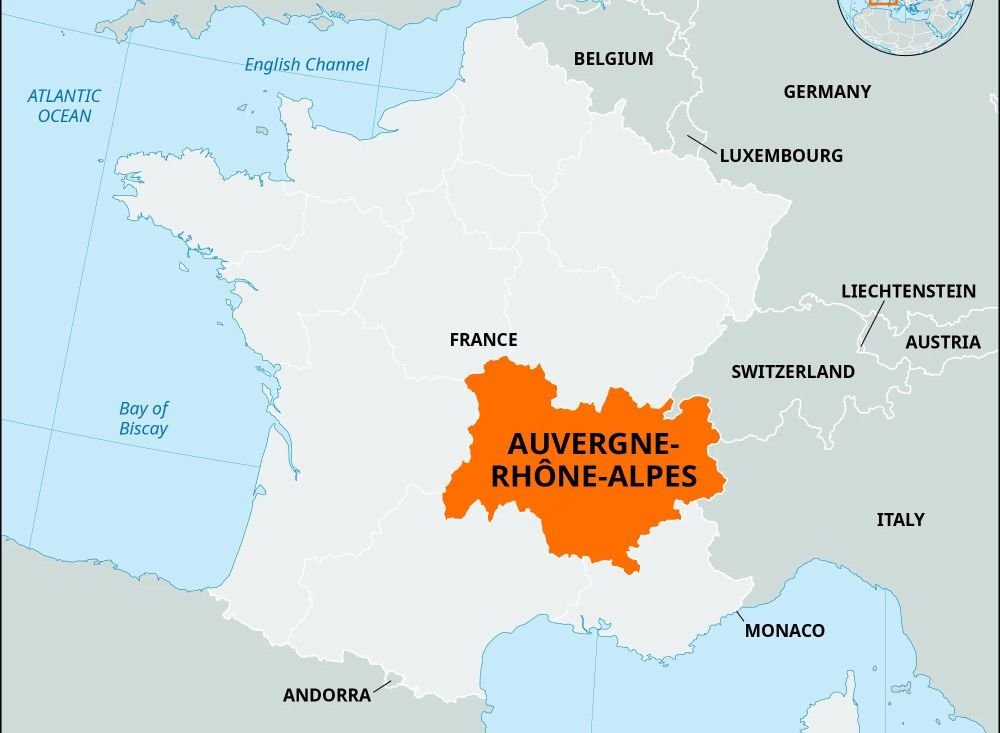
    Auvergne Rhone Alpes is a major administrative region in east-central France, created in 2016 from the merger of Auvergne and Rhone-Alpes. With Lyon as its capital, it is the second most populated and economically powerful region in France.

    Known for its diverse landscapes—ranging from the volcanic Massif Central to the high Alps and Mont Blanc—it is a premier destination for tourism, skiing, and gastronomy.

    Key Facts & Geography
    Location: Borders Switzerland and Italy to the east.
    Departments: Includes 12 departments: Ain, Allier, Ardèche, Cantal, Drome, Isère, Loire, Haute-Loire, Puy-de-Dome, Rhone, Savoie, and Haute-Savoie.
    Cities: Major cities include Lyon (capital), Grenoble, Saint-Étienne, and Clermont-Ferrand.
    Geography: Features the Alpine mountain range, the Auvergne volcanoes (Chaîne des Puys), and the Rhone/Loire river valleys.

    Tourism and Culture
    Winter Sports: Home to world-class ski resorts such as Chamonix, Courchevel, and Val d’Isère.
    Outdoor Activities: Popular for hiking, climbing, paragliding, and visiting lakes like Lac du Bourget.
    Gastronomy: Known as the home of French gastronomy, with specialties like fondue, raclette, and gratin dauphinois.
    Sites: Offers historical sites, including Roman ruins in Lyon and numerous ancient churches in Auvergne.

    Economy
    Industry: The region has a strong, diversified industrial base including electronics, biotechnology, chemicals, and energy.
    Economic Impact: It is a major economic hub, contributing 11.4% to France’s national wealth.
  • Regions of France

    Regions of France

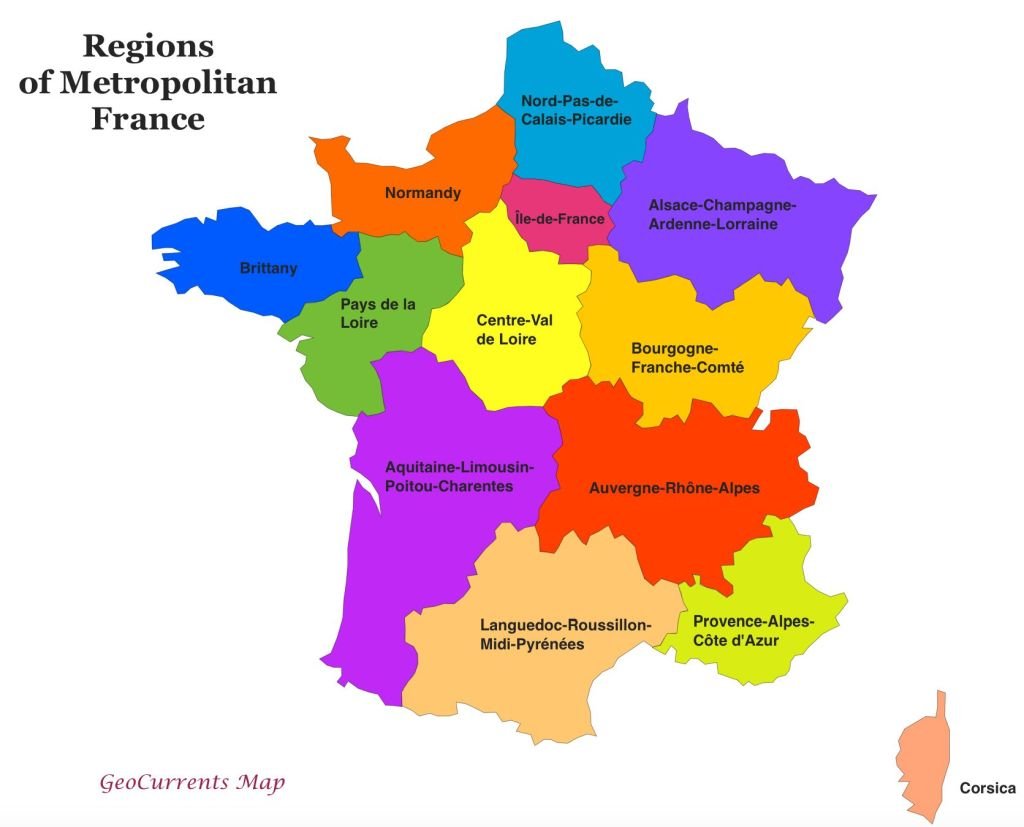
    France is divided into 18 administrative regions: 13 metropolitan regions in Europe and 5 overseas regions. These regions, reformed in 2016, serve as primary subnational administrative divisions for economic planning and local governance. Major regions include Île-de-France (Paris), Provence-Alpes-Côte d’Azur, and Nouvelle-Aquitaine.

    Metropolitan Regions (13)
    Auvergne-Rhône-Alpes: Lyon (Includes Alps and Massif Central)
    Bourgogne-Franche-Comté: Dijon/Besançon (Vineyards)
    Bretagne (Brittany): Rennes (Coastal, Celtic culture)
    Centre-Val de Loire: Orléans (Loire Valley castles)
    Corse (Corsica): Ajaccio (Island in Mediterranean)
    Grand Est: Strasbourg (Alsace, Champagne, Lorraine)
    Hauts-de-France: Lille (Northern, mining history)
    Île-de-France: Paris (Capital region)
    Normandie (Normandy): Rouen/Caen (D-Day beaches)
    Nouvelle-Aquitaine: Bordeaux (Southwest, Atlantic coast)
    Occitanie: Toulouse/Montpellier (Pyrenees, Mediterranean)
    Pays de la Loire: Nantes (Western Loire)
    Provence-Alpes-Côte d’Azur (PACA): Marseille (French Riviera)

    Overseas Regions (5)
    These regions have the same status as metropolitan regions:
    european-union.europa.eu
    Guadeloupe: Caribbean
    Guyane (French Guiana): South America
    Martinique: Caribbean
    Mayotte: Indian Ocean
    Réunion: Indian Ocean

    Historical/Former Regions
    Before the 2016 reorganization, there were 22 regions. Notable changes included merging Basse-Normandie and Haute-Normandie into Normandy, and combining regions like Languedoc-Roussillon with Midi-Pyrénées to form Occitanie.