Author: Ti

  • France Citizenship by Investment: Residency Pathway and Naturalization Process

    France does not offer a direct citizenship-by-investment program that grants French nationality in exchange for a financial contribution or investment. Instead, foreign investors may obtain residency through the Talent – Economic Investor residence permit, which provides a legal pathway toward long-term residence and, eventually, French citizenship through the standard naturalization process.

    The French system focuses on attracting entrepreneurs, investors, and business leaders who make a meaningful economic contribution to the country.

    1. France Talent – Economic Investor Residence Permit

    The Talent – Economic Investor permit is designed for foreign nationals who invest in French businesses and contribute to economic development.

    To qualify, applicants generally must meet the following requirements:

    Capital Investment Requirement

    Applicants must make a direct investment of at least €300,000 in tangible or intangible fixed assets in a French company or business activity.

    Eligible investments may include:

    • Acquisition of business assets
    • Investment in company development
    • Expansion of commercial activities
    • Strategic business projects

    Job Creation and Economic Contribution

    Investors must commit to creating or maintaining employment opportunities in France.

    The investment project should demonstrate economic benefits, including:

    • Supporting existing jobs
    • Creating new positions
    • Contributing to business growth in France

    Ownership and Management Requirement

    Applicants are generally required to:

    • Personally hold at least 30% of the company’s capital, and
    • Play an active role in managing or directing the investment project

    This ensures that the applicant has a genuine business connection with the company rather than making a passive investment only.

    2. Residence Permit Benefits

    The Talent – Economic Investor residence permit is generally granted for up to four years and can be renewed if the applicant continues to meet the conditions.

    Benefits may include:

    • Legal residence in France
    • The ability to conduct business activities
    • Inclusion of eligible family members
    • Residence rights for the spouse and minor children

    Family members may receive associated residence permits, allowing them to live and work in France under applicable rules.

    3. Pathway to French Citizenship

    Obtaining an investor residence permit does not automatically grant French citizenship. Applicants must establish a genuine long-term connection with France and satisfy the requirements for naturalization.

    Long-Term Residence

    After approximately five years of continuous legal residence, foreign nationals may become eligible to apply for long-term residence or French citizenship.

    Applicants must demonstrate:

    • Stable residence in France
    • Financial independence
    • Compliance with French laws
    • Integration into French society

    Language and Integration Requirements

    Applicants for French citizenship must usually demonstrate:

    • Sufficient knowledge of the French language
    • Understanding of French history, culture, and civic values
    • Social and economic integration into French society

    The authorities evaluate whether the applicant has developed a genuine connection with France and participates in the country’s social and economic life.

    4. Benefits of French Citizenship

    Successful naturalization provides important advantages, including:

    • A French passport
    • Full European Union citizenship rights
    • The right to live, work, and study throughout the EU
    • Freedom of movement within the Schengen Area
    • Access to French public services and social benefits

    Important Considerations

    France’s investor residency route is designed for active business investors rather than passive wealth applicants. Unlike some countries that provide residency mainly through property purchases, France requires investors to demonstrate economic involvement and contribution.

    Immigration laws, investment requirements, and citizenship procedures may change over time. Foreign investors should seek advice from qualified French immigration and legal professionals before making investment decisions.
  • The Most Visited Cities and Tourist Destinations in France

    France remains the world’s leading tourist destination, welcoming millions of international visitors each year. From the iconic landmarks of Paris and the glamorous French Riviera to medieval towns, celebrated wine regions, and historic cultural centers, the country offers an exceptional variety of travel experiences.

    Whether you’re interested in art, architecture, gastronomy, history, or spectacular scenery, France’s most visited cities showcase the nation’s extraordinary heritage and enduring appeal. Based on tourism popularity and annual visitor numbers, these are the 15 most visited cities in France.

    1. Paris

    France’s capital is one of the world’s most iconic travel destinations and the country’s undisputed tourism hub. Often called the “City of Light,” Paris captivates visitors with its timeless elegance, historic monuments, renowned museums, and romantic atmosphere.

    Highlights include the Eiffel Tower, the Louvre Museum, Notre-Dame Cathedral, the Arc de Triomphe, the Champs-Élysées, Montmartre, the Palace of Versailles, and scenic cruises along the River Seine. The city’s fashion, fine dining, and cultural attractions ensure its place among the world’s greatest cities.

    2. Nice

    Overlooking the sparkling Mediterranean Sea, Nice is the largest city on the French Riviera and one of France’s most popular holiday destinations. Its sunny climate, palm-lined boulevards, and elegant waterfront attract visitors throughout the year.

    The famous Promenade des Anglais, the colorful Old Town (Vieux Nice), Castle Hill, lively markets, and beautiful beaches make Nice the perfect blend of seaside relaxation and cultural exploration.

    3. Lyon

    Situated where the Rhône and Saône rivers meet, Lyon is widely regarded as the culinary capital of France. The city combines remarkable historical architecture with an internationally acclaimed food scene.

    Visitors explore the UNESCO-listed Old Town, the Basilica of Notre-Dame de Fourvière, ancient Roman theaters, vibrant riverside districts, and the city’s famous bouchons, where traditional Lyonnaise cuisine is served.

    4. Marseille

    As France’s oldest city and largest Mediterranean port, Marseille offers a fascinating mix of history, maritime heritage, and multicultural influences.

    The picturesque Old Port (Vieux-Port), the Basilica of Notre-Dame de la Garde, the historic Le Panier district, and the spectacular Calanques National Park are among the city’s most popular attractions. Marseille also serves as a gateway to the beautiful Provence region.

    5. Strasbourg

    Located near the German border, Strasbourg is famous for its unique blend of French and German culture. The city is home to several important European institutions and boasts one of France’s best-preserved historic centers.

    Visitors enjoy wandering through the charming La Petite France district, admiring Strasbourg Cathedral, exploring picturesque canals, and experiencing one of Europe’s most celebrated Christmas markets.

    6. Bordeaux

    Known worldwide for its prestigious vineyards and exceptional wines, Bordeaux is one of France’s most elegant cities. Its beautifully restored historic center has earned UNESCO World Heritage status.

    Top attractions include the Place de la Bourse, the famous Miroir d’Eau, Bordeaux Cathedral, the Cité du Vin wine museum, and numerous wine-tasting experiences in the surrounding vineyards.

    7. Toulouse

    Often called “La Ville Rose” (The Pink City) because of its distinctive terracotta buildings, Toulouse is a vibrant city with a rich cultural heritage and a thriving aerospace industry.

    Visitors can explore the magnificent Place du Capitole, the Basilica of Saint-Sernin, scenic canals, museums, and lively cafés while enjoying the relaxed atmosphere of southern France.

    8. Montpellier

    One of France’s fastest-growing cities, Montpellier is a lively university center that combines medieval history with modern urban development.

    The city’s charming Old Town, Place de la Comédie, elegant mansions, botanical gardens, and nearby Mediterranean beaches make it a favorite destination for both cultural travelers and holidaymakers.

    9. Lille

    Situated in northern France near the Belgian border, Lille is known for its impressive Flemish architecture, outstanding museums, and energetic cultural scene.

    Visitors can admire the beautiful Grand Place, the historic Old Town, the Palais des Beaux-Arts, bustling shopping streets, and numerous cafés that reflect the city’s welcoming atmosphere.

    10. Cannes

    Synonymous with luxury and glamour, Cannes is one of the French Riviera’s most prestigious destinations. Every year, it hosts the internationally renowned Cannes Film Festival, attracting celebrities and filmmakers from around the globe.

    Beyond its famous red carpet, visitors enjoy elegant boutiques, luxury hotels, sandy beaches, yacht-filled marinas, and the scenic Boulevard de la Croisette.

    11. Avignon

    Located in the heart of Provence, Avignon is celebrated for its remarkable medieval heritage and its role as the residence of the Popes during the 14th century.

    The magnificent Palais des Papes, the Pont d’Avignon, charming old streets, and the internationally acclaimed Avignon Theatre Festival make the city one of southern France’s cultural highlights.

    12. Nîmes

    Nîmes is renowned for possessing some of the finest Roman monuments outside Italy. The city’s remarkable archaeological heritage attracts history enthusiasts from around the world.

    Its best-known landmarks include the Arena of Nîmes, the Maison Carrée, the Tour Magne, and beautifully landscaped gardens that preserve the city’s ancient character.

    13. Aix-en-Provence

    Elegant boulevards, graceful fountains, and vibrant outdoor markets define Aix-en-Provence, one of the most charming cities in southern France.

    Closely associated with painter Paul Cézanne, the city offers visitors a delightful mix of art, history, boutique shopping, cafés, and Provençal cuisine set within a relaxed Mediterranean atmosphere.

    14. Dijon

    The historic capital of Burgundy is celebrated for its rich culinary traditions, medieval architecture, and centuries-old wine culture.

    Visitors can discover the Palace of the Dukes of Burgundy, picturesque half-timbered streets, local food markets, and museums while sampling the city’s world-famous mustard and Burgundy wines.

    15. Lourdes

    Nestled in the foothills of the Pyrenees, Lourdes is one of the world’s most significant Christian pilgrimage destinations. Millions of pilgrims and visitors travel here each year seeking spiritual reflection and healing.

    The Sanctuary of Our Lady of Lourdes, the Grotto of Massabielle, candlelight processions, and the surrounding mountain scenery make Lourdes a destination of both religious and cultural importance.

    Experience the Best of France

    From the timeless elegance of Paris and the sun-drenched resorts of the French Riviera to historic Roman cities, celebrated wine regions, and picturesque medieval towns, France offers an extraordinary diversity of travel experiences. Every destination reflects a unique aspect of the country’s rich history, artistic heritage, culinary excellence, and regional character.

    Together, these 15 cities represent the very best of French tourism, making France an unforgettable destination for travelers seeking culture, history, gastronomy, natural beauty, and world-famous landmarks.

  • Auvergne Rhone Alpes

    Auvergne Rhone Alpes

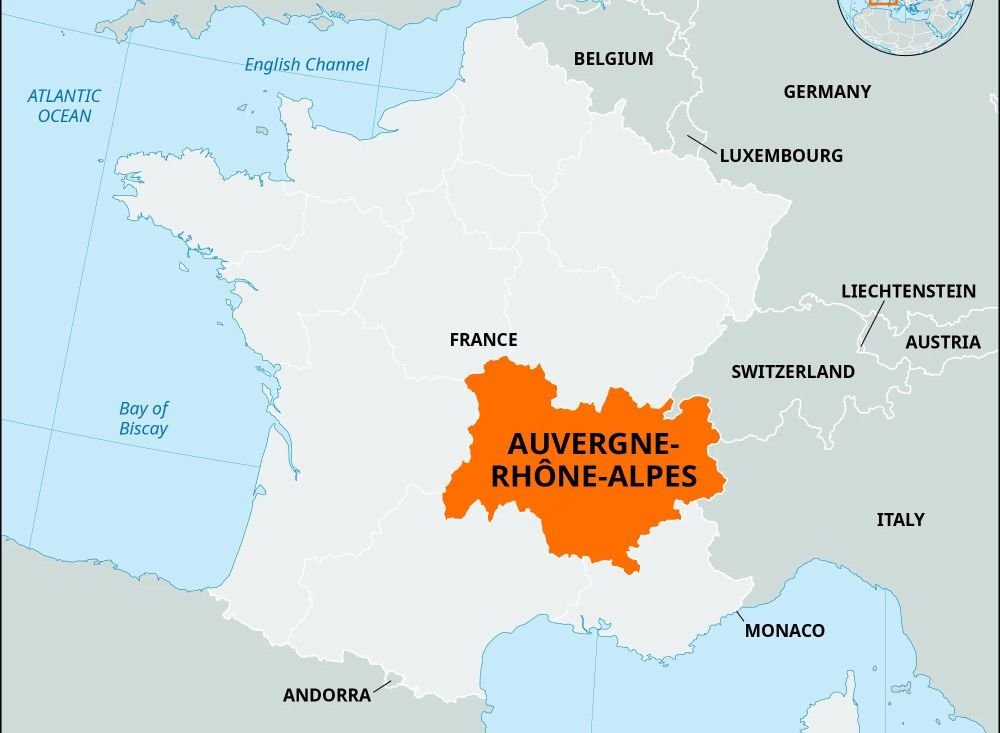
    Auvergne Rhone Alpes is a major administrative region in east-central France, created in 2016 from the merger of Auvergne and Rhone-Alpes. With Lyon as its capital, it is the second most populated and economically powerful region in France.

    Known for its diverse landscapes—ranging from the volcanic Massif Central to the high Alps and Mont Blanc—it is a premier destination for tourism, skiing, and gastronomy.

    Key Facts & Geography
    Location: Borders Switzerland and Italy to the east.
    Departments: Includes 12 departments: Ain, Allier, Ardèche, Cantal, Drome, Isère, Loire, Haute-Loire, Puy-de-Dome, Rhone, Savoie, and Haute-Savoie.
    Cities: Major cities include Lyon (capital), Grenoble, Saint-Étienne, and Clermont-Ferrand.
    Geography: Features the Alpine mountain range, the Auvergne volcanoes (Chaîne des Puys), and the Rhone/Loire river valleys.

    Tourism and Culture
    Winter Sports: Home to world-class ski resorts such as Chamonix, Courchevel, and Val d’Isère.
    Outdoor Activities: Popular for hiking, climbing, paragliding, and visiting lakes like Lac du Bourget.
    Gastronomy: Known as the home of French gastronomy, with specialties like fondue, raclette, and gratin dauphinois.
    Sites: Offers historical sites, including Roman ruins in Lyon and numerous ancient churches in Auvergne.

    Economy
    Industry: The region has a strong, diversified industrial base including electronics, biotechnology, chemicals, and energy.
    Economic Impact: It is a major economic hub, contributing 11.4% to France’s national wealth.

  • Regions of France

    Regions of France

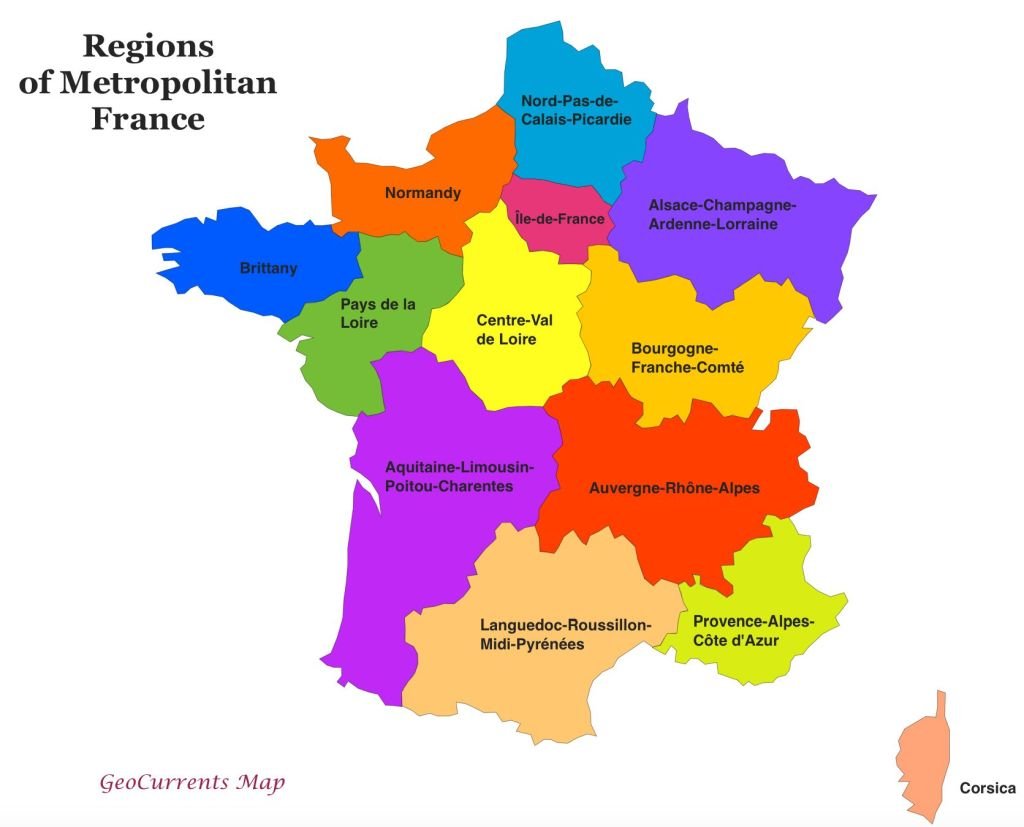
    France is divided into 18 administrative regions: 13 metropolitan regions in Europe and 5 overseas regions. These regions, reformed in 2016, serve as primary subnational administrative divisions for economic planning and local governance. Major regions include Île-de-France (Paris), Provence-Alpes-Côte d’Azur, and Nouvelle-Aquitaine.

    Metropolitan Regions (13)
    Auvergne-Rhône-Alpes: Lyon (Includes Alps and Massif Central)
    Bourgogne-Franche-Comté: Dijon/Besançon (Vineyards)
    Bretagne (Brittany): Rennes (Coastal, Celtic culture)
    Centre-Val de Loire: Orléans (Loire Valley castles)
    Corse (Corsica): Ajaccio (Island in Mediterranean)
    Grand Est: Strasbourg (Alsace, Champagne, Lorraine)
    Hauts-de-France: Lille (Northern, mining history)
    Île-de-France: Paris (Capital region)
    Normandie (Normandy): Rouen/Caen (D-Day beaches)
    Nouvelle-Aquitaine: Bordeaux (Southwest, Atlantic coast)
    Occitanie: Toulouse/Montpellier (Pyrenees, Mediterranean)
    Pays de la Loire: Nantes (Western Loire)
    Provence-Alpes-Côte d’Azur (PACA): Marseille (French Riviera)

    Overseas Regions (5)
    These regions have the same status as metropolitan regions:
    european-union.europa.eu
    Guadeloupe: Caribbean
    Guyane (French Guiana): South America
    Martinique: Caribbean
    Mayotte: Indian Ocean
    Réunion: Indian Ocean

    Historical/Former Regions
    Before the 2016 reorganization, there were 22 regions. Notable changes included merging Basse-Normandie and Haute-Normandie into Normandy, and combining regions like Languedoc-Roussillon with Midi-Pyrénées to form Occitanie.

  • The Most Visited Towns bu Tourist in France

    France is one of the world’s most popular tourist destinations, attracting millions of international visitors every year with its extraordinary combination of historic cities, romantic villages, Mediterranean resorts, Atlantic beaches, Alpine landscapes, world-famous gastronomy, and cultural heritage.

    Unlike countries that publish a strict annual ranking of individual towns, French tourism statistics are generally compiled by regions, departments, municipalities (communes), and overnight stays rather than by a single official list of the “35 most visited towns.” However, the following destinations consistently rank among the most popular and internationally recognized places to visit in France.


    🗼 Iconic Cities & Major Tourist Hubs

    1. Paris – The World’s Most Visited City

    Paris is the ultimate gateway to France and one of the most visited cities on Earth. Known as the “City of Light,” it combines legendary monuments, world-class museums, fashion, gastronomy, and romantic atmosphere.

    Top attractions include:

    • Eiffel Tower
    • Louvre Museum
    • Notre-Dame de Paris
    • Arc de Triomphe
    • Champs-Élysées
    • Montmartre

    2. Nice – The Jewel of the Côte d’Azur

    Nice is the most visited city on the French Riviera and a major Mediterranean destination.

    Highlights:

    • Promenade des Anglais
    • Old Town (Vieux Nice)
    • Mediterranean beaches
    • Castle Hill viewpoints
    • Nearby destinations such as Monaco and Cannes

    3. Lyon – France’s Gastronomic Capital

    Lyon is famous for its cuisine, Renaissance districts, Roman heritage, and vibrant cultural scene.

    Must-see attractions:

    • Old Lyon
    • Basilica of Notre-Dame de Fourvière
    • Roman theatres
    • Traboules (historic passageways)

    4. Bordeaux – The Wine Capital of France

    Bordeaux attracts visitors with elegant architecture, wine tourism, and UNESCO-listed urban landscapes.

    Top experiences:

    • Place de la Bourse
    • Cité du Vin
    • Wine routes of Médoc and Saint-Émilion
    • Historic riverfront

    5. Marseille – Mediterranean Gateway

    France’s oldest city offers a unique blend of Mediterranean culture, history, and seaside landscapes.

    Highlights:

    • Old Port (Vieux-Port)
    • Notre-Dame de la Garde
    • Calanques National Park
    • Le Panier district

    🏰 Historic Towns & Cultural Destinations

    6. Avignon – The City of Popes

    Avignon is one of Provence’s most visited historic towns.

    Famous for:

    • Palais des Papes
    • Pont Saint-Bénézet
    • Medieval city walls
    • Summer theatre festival

    7. Mont Saint-Michel – The Medieval Island Wonder

    One of France’s most recognizable landmarks, Mont Saint-Michel rises dramatically from the tidal waters of Normandy.

    Highlights:

    • Medieval abbey
    • Narrow historic streets
    • Bay walks
    • UNESCO World Heritage atmosphere

    8. Annecy – The Venice of the Alps

    Annecy is famous for its turquoise lake, canals, and beautifully preserved old town.

    Top attractions:

    • Lake Annecy
    • Palais de l’Île
    • Château d’Annecy
    • Mountain activities

    9. Colmar – A Fairytale Alsatian Town

    Colmar is one of France’s most photographed towns, famous for colorful houses and canals.

    Highlights:

    • Little Venice district
    • Half-timbered houses
    • Christmas markets
    • Alsatian cuisine

    10. Strasbourg – European Capital of Culture

    Strasbourg combines French and German influences.

    Top sights:

    • Strasbourg Cathedral
    • Petite France district
    • European Parliament
    • Christmas market

    11. Avignon

    (Already listed among France’s historic highlights)


    11. Lille – Northern France’s Cultural Hub

    Lille is known for Flemish architecture, lively squares, and cultural events.

    Highlights:

    • Old Lille
    • Grand Place
    • Palais des Beaux-Arts
    • Braderie de Lille flea market

    12. Rouen – Historic Capital of Normandy

    Rouen attracts visitors with medieval streets and Gothic architecture.

    Famous for:

    • Rouen Cathedral
    • Joan of Arc history
    • Old timber-framed houses

    13. Reims – The Champagne Capital

    Reims is famous for sparkling wine production and royal history.

    Highlights:

    • Notre-Dame de Reims Cathedral
    • Champagne cellars
    • Palais du Tau

    14. Arles – Roman Heritage & Van Gogh’s Inspiration

    Arles is famous for:

    • Roman amphitheatre
    • Ancient monuments
    • Vincent van Gogh heritage
    • Provençal atmosphere

    15. Aix-en-Provence – Elegant Southern France

    Aix-en-Provence is known for fountains, markets, art, and Mediterranean charm.

    Highlights:

    • Cours Mirabeau
    • Cézanne heritage
    • Provençal markets
    • Historic architecture

    🌊 Coastal & Riviera Destinations

    16. Cannes – Glamour of the Côte d’Azur

    Cannes is famous worldwide for:

    • Cannes Film Festival
    • La Croisette boulevard
    • Luxury hotels
    • Beaches
    • Yacht harbor

    17. Saint-Tropez – Luxury Mediterranean Village

    Once a fishing village, Saint-Tropez became an international luxury destination.

    Popular for:

    • Old port
    • Beaches
    • Beach clubs
    • Designer boutiques

    18. Biarritz – Surfing Capital of France

    Biarritz combines elegant seaside architecture with Atlantic beaches.

    Highlights:

    • Grand Plage
    • Surf culture
    • Rocher de la Vierge
    • Hôtel du Palais

    19. Saint-Malo – The Walled Pirate City

    Saint-Malo is famous for:

    • Historic ramparts
    • Maritime heritage
    • Powerful tides
    • Coastal scenery

    20. La Rochelle – Atlantic Ocean Gateway

    Known for:

    • Medieval harbor towers
    • Aquarium
    • Sailing culture
    • Historic center

    21. Saint-Jean-de-Luz

    A charming fishing port famous for:

    • Sandy beaches
    • Basque traditions
    • Seafood restaurants
    • Historic architecture

    🍷 Wine, Villages & Hidden Gems

    22. Beaune – Wine Capital of Burgundy

    Famous for:

    • Hospices de Beaune
    • Burgundy wine routes
    • Historic center

    23. Sarlat-la-Canéda – Medieval Dordogne Treasure

    One of France’s best-preserved medieval towns.

    Highlights:

    • Golden stone buildings
    • Historic streets
    • Dordogne castles nearby

    24. Saint-Émilion – UNESCO Wine Village

    A spectacular medieval village surrounded by famous vineyards.


    25. Nantes – Atlantic Cultural Center

    Known for:

    • Château des Ducs de Bretagne
    • Machines de l’île
    • Maritime history

    26. Montpellier – Mediterranean University City

    Popular for:

    • Historic center
    • Sunny climate
    • Beaches nearby
    • Cultural festivals

    🏔️ Alpine & Mountain Destinations

    27. Chamonix-Mont-Blanc – Alpine Adventure Capital

    Famous worldwide for:

    • Mont Blanc views
    • Skiing
    • Hiking
    • Cable cars

    28. Annecy

    Already listed as a major Alpine destination.


    29. Megève – Luxury Alpine Resort

    A prestigious mountain village known for:

    • Ski resorts
    • Luxury hotels
    • Traditional charm

    🏛️ Additional Popular Tourist Towns

    30. Toulouse – The Pink City

    Known for:

    • Brick architecture
    • Aerospace industry
    • Basilica of Saint-Sernin

    31. Carcassonne – Medieval Fortress City

    Famous for:

    • Massive medieval walls
    • Château Comtal
    • Historic atmosphere

    32. Dijon – Capital of Burgundy

    Known for:

    • Palace of the Dukes
    • Mustard tradition
    • Wine heritage

    33. Tours – Gateway to Loire Valley Castles

    Popular for:

    • Loire châteaux
    • Historic old town
    • French Renaissance heritage

    34. Giverny – Monet’s Garden Village

    A pilgrimage destination for art lovers visiting:

    • Claude Monet’s house
    • Famous gardens
    • Impressionist heritage

    35. Nîmes – Roman Heritage City

    Famous for:

    • Roman Arena
    • Maison Carrée
    • Ancient Roman monuments

    Why France Remains One of the World’s Top Tourist Countries

    France attracts visitors because it offers an extraordinary variety of experiences:

    ✅ World-famous museums and monuments
    ✅ Historic medieval towns and villages
    ✅ Mediterranean and Atlantic beaches
    ✅ Alpine skiing and hiking destinations
    ✅ Wine regions and gastronomy
    ✅ UNESCO World Heritage Sites
    ✅ Fashion, art, and cultural festivals

    From Paris’s iconic landmarks to Provence’s villages, Brittany’s coastline, and the Alps’ dramatic landscapes, France remains one of the most diverse and rewarding travel destinations in the world.

  • Paris offers something unforgettable for every traveler

    Paris continues to rank among the most visited cities in the world, and in 2026 it remains one of the best places to visit in Europe. Whether you are planning your first international trip, a romantic getaway, or a family vacation, Paris offers something unforgettable for every traveler. It combines history, architecture, art, fashion, and cuisine in a way few cities can match.

    Paris is magical year-round, but every season has its own personality. September and October bring autumn colors and ideal walking temperatures, while April through June offers classic springtime with parks in bloom and long days. November through February is the most budget-friendly period, excluding the holidays.

    When it comes to entry requirements, EU citizens only need a National ID card, while non-EU travelers need a passport and may require a Schengen Visa or the new ETIAS authorization – check current 2026 requirements before flying.


    Food & Culture

    Paris is a city that lives and breathes its culinary identity. The city boasts over 70 Michelin-starred restaurants, but eating well in Paris is not reserved for high budgets. Bistros are casual neighborhood restaurants with a limited menu and specific lunch and dinner hours – great spots for local dishes and desserts. Brasseries, on the other hand, are larger spaces open throughout the day with a broader menu.

    Some dishes you should not miss: French onion soup topped with melted cheese and croutons, escargots cooked with garlic and butter, steak frites with a rich Béarnaise sauce, and world-class macarons from celebrated pâtisseries.

    For those who want to go deeper into Parisian food culture, food tours are an excellent way to eat through the city while learning what makes the cuisine so unique, with guided experiences led by expert locals.


    Adventure & Outdoors

    Paris offers far more than museums and monuments for the active traveler. Père Lachaise Cemetery combines historic significance and notable graves in a peaceful 110-acre setting, with free entry and maps available at the entrances. Montmartre offers cobblestone streets, artistic heritage, panoramic views, and a village atmosphere – all without entry fees.

    Strolling along the Seine is one of the most rewarding free experiences in the city, with iconic views of the Eiffel Tower and Notre-Dame, as well as quaint bookstores and markets along the riverbanks.

    Major parks including Luxembourg Gardens, Jardin des Tuileries, and Parc de Belleville are well-maintained and free to enjoy. Notre-Dame Cathedral and Sacré-Cœur Basilica also remain free to visit in 2026.


    Budget Travel Tips

    Paris has a reputation as an expensive destination, but smart planning makes it very accessible. Budget travelers can expect to spend around €70–90 per day covering hostels, street food, and walking, while mid-range travelers typically spend €150–200 per day including a 3-star hotel, one restaurant meal, and museum entries.

    For food on a budget, local bakeries and open-air markets like Marché Bastille offer fresh baguettes, cheese, and charcuterie perfect for a picnic along the Seine. Historic brasseries like Bouillon Chartier serve hearty classics for under €10.

    On transportation, central Paris arrondissements are compact enough to walk between most attractions, saving significantly on metro fares. For those who need public transit frequently, a weekly Navigo pass provides unlimited metro, bus, and RER usage.

    Finally, free museum days, park access, walking tours, and monument exteriors provide substantial cultural exposure at zero cost – making Paris far more budget-friendly than its reputation suggests.